The Spiral Study Technique

What is the most important component of any exam preparation? In other words, how does one make sure their preparation is at the required level? The answer is simple- revision. But the more difficult question lies in this seemingly simple answer- HOW to revise? In this post, we will examine a study technique I call “Spiral Study Technique”.

There are different types of learners. There are some exceptional students who have, what we call, a photographic memory. They can remember what they read, almost immediately. But, most of us, we aren’t like that. We need to keep on reading multiple times, with the hope that eventually, we can remember the useful stuff on the day of exam. But a lot of people have a very haphazard method of revision. I feel, that the revision should be organized, keeping in mind the actual physiology of memory creation. When we read, or see something, a faint connection is made in our brain. Subsequent revisions serve to enforce those connections, or synapses. Now, if the revisions are not done in an organised way, those links will not be strong. It is akin to a large number of strands with no connection whatsoever. They will be broken easily. But, what if, we can get those multiple strands in place, bound tightly together? Not so easy to break, right? So, without further ado, lets dive in this wonderful revision technique!

Consider yourself at the starting point of the above spiral. Your aim is reach the point at the centre. So, you start runnin, in this case, studying. The outermost curve of the spiral represents your first reading. The first reading is extremely important, because it helps you gauge the length and breadth of course. So, when you sit down and make your study plan, you have to keep maximum time for the first reading. Start making notes of your own, if you are comfortable with that. At the end of first reading, you will hardly be able to recall anything you read in the initial days. That’s perfectly okay. Then, you start a revision. Now, the first revision should take lesser time than the first reading. You are in the inner arm of the spiral. The speed should increase, but you still have to finish the whole round. During this revision session, continue reading from notes, and add some extra info if you come across. This revision should take roughly half as long as your initial reading.

Now, you are done with the first revision. At this point, your exams are probably 2-3 months away. So, you enter the inner arms of the spiral. Once again you revise, but this time, it is faster than before. You dont have to read all topics in as much depth as before. During the first two readings, you can write short summary of the topic on the side of the book. So now, you have to read just those. Another technique you can use, is the “memory trigger”. Often, we may not remember entire paragraphs, but we need to recall just a few words, that will trigger the memory of the whole page, or even the chapter. Identify those trigger words, or key words from the chapter or topic, and make a note of them at the beginning. So, this revision is aimed at strengthening those synapses. You are essentially hitting the hammer multiple times at the same site. Repeat the same process 1-2 times more, with more speed as you approach the exams. By this time, you are at the centre of the spiral, where the exam day lies.

Now, there are some DOs and DON’Ts that come with this technique. It relies on careful, systematic revisions. You need to plan at least the first two readings well in advance. Subsequent readings and revisions, you can plan later, after gauging your prep level. DO NOT indulge excessively on those exam prep whatsapp groups. It is good to go through the chats and look for some good questions, but do not spend excess time, trying to figure out questions of topics that you aren’t studying currently. It will only serve to loosen the synapses forming in your brain. So, avoid that. Another important point- Rest. Keep aside a fixed hour or two, for relaxation. Once you are done with the planned studies of the day, close your book and relax. Go for a movie, or a café or watch TV. It is perfectly okay to relax at the end of a day. Helps recharge your mind, and loosen up your brain, so that it can be ready for the workout next day. DO NOT keep studying 15-16 hours a day. Because remember, we are running a marathon, not a sprint. If you tire yourself out at the beginning, you wont be able to pick up pace when its actually needed.

I hope this post helped you in devising some sort of a study plan. I have used this for my NEET PG, MS final exams, NEET SS and M.Ch final exams. It has helped me every single time, and hence I thought I should share it with you all. Good luck for your exams!

Important notes and ppt

These are my notes and ppt that I made during preparation for Surg onco final exams. You can download them and forward to your friends and colleagues.

Sprints and Marathons

Mo Farah, World’s best long distance runner

In the previous post, we came across some interesting plans and study techniques, which I tried to use, in order to propel my rank. Like any plan, the beginning was smooth. I was able to cover most topics, revise according to plan and was starting to feel a little confident. The coaching classes were also going pretty well, and I had made some excellent notes. Things were looking good.

And then, I met one of my friends in our college. He had obtained a good rank, and hence, taken a good clinical branch at our institute. We chatted up for a while, and then, he had to leave for evening rounds. It felt good initially, but then, I was engulfed by this strange new emotion. Suddenly, I thought, “We were equals during our MBBS days. In fact, I scored more than him. Then, how does he have a seat and I dont?” I wondered whether he had cheated, or didn’t attend internship postings, or whether he truly deserved to take the seat. The thoughts came in a rush, and it was overwhelming. The emotion was unknown to me. It was Jealousy. I had never been jealous of anyone before. There was never a reason to be. Academically, I had achieved most of my goals till then. But now, someone was ahead of me. Someone, who I thought was my equal or inferior.

And then, as does happen with negative emotions, there started a cycle of different negative emotions, until it started to spiral out of control. There were voices in my head telling me that I was never fit to be a doctor, or that there would be no guarantee I would qualify this year. I saw a couple of juniors in final MBBS pass by. I wondered if they would get a seat before me. It was a condition of helplessness. I decided to snap out of it by doing what I loved the most- eat. I went to the canteen, ordered a hot coffee and a sandwich. Munching down the sandwich, I gave it a deep thought- what was my biggest fear? The answer was obvious- that I might not get a good rank for the second time. So, what would be the worst outcome in this scenario? The possible worst outcome would have been that I would not get a seat of my choice. Was I okay with it? I wasn’t sure. But I would have been happy to give my best shot in this attempt.

You all must be surprised. In the previous chapter, I was talking about getting a rank in top 1000. Here, I am talking about a chance at failure and being able to accept it. Truth is, we need to keep both possibilities in mind. While climbing a mountain, if we keep one eye on the peak, we also have to keep another eye on the valley below us. Success and failure are separated by the smallest of margins, and we often walk on the edge of that margin. A tilt here, or there and it’s all over.

As the months passed, such emotions started coming back again and again. It is exacerbated when you see your non-medico colleague get a job and start earning 1 lac/month, while you are at home, mugging MCQs. It happens to us all, and I was no exception. Sometimes, I was able to fight it out by just talking to my friends in the college, or on the online study group. yes, we had made a small online study group where we discussed MCQs late at night. It was small bunch of 8-9 people. Over time, we grew close to each other, and by the time this phase ended, most of us were friends, despite not having met each other even once. Talking helps a lot. It relieves your stress, makes you feel that you are not alone and gives you renewed strength to fight on. Everyone feels low, at least once. It helps to have someone you could talk to.

Preparation for any exam is not a sprint. It is more of a marathon. You cannot drop out of the race due to fatigue, and believe me, fatigue DOES strike. Sometimes, all it matters is that you are standing. Even if you do not progress, you are happy not to fall behind. Every time such “study fatigue” struck, I’d take a small half-day break, go watch a movie or read my favorite novel. Sometimes, it is better to sharpen the axe, than keeping cutting down tress with a blunt weapon.

As the days winded down, the exam date approached. Barely a month to go, and there was panic everywhere. People were stressed, and for most, the stress was getting better of them. I had a small “last month” plan in my hand, based on the previous revisions, and it helped me remain calm. We had entered the last lap of the marathon, and now it was my turn to sprint. Chapters were revised in a frenzy. I had muted every single Whatsapp group. Nothing else mattered, not even friends. One month passed in a blur. The sprint went on till the D-day arrived. A million thoughts ran in my head, a thousand possible outcomes. Taking a deep breath, reciting my Guru’s prayer and my favorite music plugged in my car, I stepped out.

It had been a long marathon. Now, it was the time to cross that bloody finish line!

Chapter 2- Scalars and Vectors

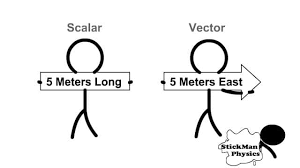
An oft-quoted line is, “A journey of a thousand miles begins with a single step.” It is a very powerful statement that underlines the impact of the “first step”. However, what this quote does not take into account, is the direction of the said step. A step in a wrong direction would lead the person on a thousand mile journey to nothingness. Direction is very important, and haphazard efforts often lead to failure. Direction makes our effort a ‘vector’ quantity from ‘scalar’.

As we saw in the previous chapter (click here to read it), I was at an all-time low, and had challenged myself to crack the top-1000 rank. It was my own “Mission Moon”. And like any space mission, it needed the right equipment, fuel and most importantly, planning. Failing to plan is planning to fail, someone said once. By God’s and my parents’ grace, I had every resource at my disposal. Best coaching classes, entrance exam guides et al. But something else was needed too, which I discovered on the first day of the coaching classes. They were being held in a massive hall, and there were close to 2000-3000 of us in there. The teacher came up and started with Anatomy, and everyone was making notes. I was not used to it, and thus, I failed to make most of the notes in the pre-lunch session. During lunch break, I chatted with some students there. For most of them, it was their second or third, even fourth attempt. Effectively, most of them had already read everything once, twice or maybe more. They were here for the ‘revision’, while I was just discovering the intricacies of human anatomy, that I had forgotten after 1st MBBS. That evening, I sat down at home and gave a rough calculation of the number of students my coaching class would be having across India, if they had 3000 in our centre. And then, there were ten more classes. Everywhere, the faculties would teach the same thing, they would have the same books, same guides.

It was terrifying.

Even if I removed the bottom 20-25% who didn’t study seriously, it still came to almost 50,000 students with almost the same resources and determination like me. And I wasn’t even the smartest guy in the country, with some magic memory. No, not at all. In fact, I had aggregated 65% in MBBS, bang average score according to standards there. So, in order to crack the top 1000, out of those 50,000, I had to do something that made me unique. Something that would get me better scores with the same resources. And from here, the first ‘plan’ was born.

“Play to your strengths, work around your weaknesses.” I remembered this line by Dr B.N. Dastoor, a close friend of my father. It made absolute sense. I had a limited time, and I had to ration my time. And then, I started with an old management tool- the SWOT analysis. It is a summary of one’s Strengths and Weaknesses, the Opportunities they have and the Threats they might face in their way. For that, I had to be brutally honest to myself. Honesty to self, I feel, is one of the most important qualities. We have to own up our failures, identify our mistakes ourselves. We cannot keep on blaming external forces for everything, we cannot keep on making a fool of ourselves in order to justify our every failure. Sometimes, we just have to stand up and say, “Yes, I screwed up.”

From that exercise, came out a lot of revelations. I was good at some subjects, poor at some. I could not mug up blindly, I could not sit and read for more than 6-7 hours a day (I had friends who could read for over 12 hours), and I could not concentrate on studying because of the new toy called Smartphone. There were 19 subjects, some big and some small. Some were easy, some difficult. I took out old papers and studied them, trying to figure out which topics are being asked more often. Since the exam pattern was new, there wasnt a lot to refer to. But what I read, was enough to divide the whole course into three sections:

  1. Scoring and easy- These were the subjects which were easy to read, small in size, relatively more questions asked and most importantly, the chances of getting more MCQs correct INCREASED with more effort. In short, these were the most rewarding subjects.
  2. Scoring but difficult- These were the subjects which demanded a lot, but the return of effort was low. You may spend a lot of time on these subjects, but the average increase in score would not be proportional to the effort.
  3. Not scoring- These were subjects which contributed to 2/3 MCQs but the material in guides was 150-200 pages long.

Each category of subject would be dealt with differently, as per the plan. The first category, I decided to go full throttle- read the entrance guide, class notes, textbook everything. For the second category, I mainly relied on theory part given in entrance guides and some class notes. For the third category, I read only the class notes, which were concise and solved all previous years’ MCQs. This was the plan. Nineteen subjects, nineteen weeks for the first reading.

Since I wasnt very good at memorising, I decided to have multiple revisions. How to do it in a limited time? So, I started something called ‘staggered revisions’, where I would start the day with revision of what I had read in the previous week for an hour or two. So, by the time my ‘first reading’ ended, I was done with my first revision too. And then, there was the matter of weekly tests. Since the tests were online, we had the leisure of giving them whenever we wanted. I wondered, what is the point of these subject wise tests? If it is to test how much we know, then why give the test immediately after reading the subject? Anyone can score there. So, I started this practice where I would give the test one week after studying that chapter. Obviously, my score would be low, but it would help me in defining two things-

  1. The topics in the subjects I remembered a week later. These would be in the long term memory and during revision, I could simply glance through them.
  2. The topics I forgot in just a week. These were volatile, short term memory things. These needed to be revised more thoroughly.

It looked good, this plan. Took me almost a week to form it, and now, it was time to implement it. I didnt know whether this would succeed, but it represented the best chance to me. Like in football, a manager can only set the tactics and train the players. The end result is in the hands of the players, and the manager has to remain on the touchline. The difference was, here I was the manager and I was the player. I was blessed to have a fantastic support staff in my parents, my girlfriend (now wife) and above all, blessings of our Guru.

It was time to kick some ass.

Chapter 1- Daydreams that keep you awake

What is a dream really? Dreams mean a lot to different people. For some, it is like a gold at the end of a rainbow, meant to keep one occupied, without hopes of a tangible result. For some, it is a medium to pass some time, and show the world they are working towards something. And for some, it is the vision that doesn’t let them sleep.

I had never been an ardent football fan, but on one man I admired the most, was Mr. Arsene Wenger. His vision for football percolated to his vision for life itself. The reason most Arsenal fans started following the club, was it’s 2003-04 season, the famous Invincible season. They went a whole season unbeaten in the league, and played some of the best football people had ever seen. Everything started with Mr Wenger giving a public statement, “I believe we can go a whole season unbeaten.” This was in 2002, when they lost the immediate next game, and also surrendered the title to their rivals. Everybody made fun of Arsene Wenger. He didn’t buckle under the mockery, and worked to make his team one of the best in the world.

I was down in the dumps after the result. More than half of my batchmates had taken a PG seat, and I was left behind. Almost half of my friends’ group got a seat, including everyone I used to study with. I had decided to take a drop, but would I succeed? There was no way to tell. This was a completely novel experience for someone who hadn’t tasted enough failure in life, to know what to do next. In front of me, lay a mountain of a syllabus, including nineteen subjects, innumerable MCQs, mock tests, coaching class material and my notes. All this, for a statistically, less than 1% chance of success. LESS THAN ONE PERCENT. Ninety thousand-odd people gave the exam in the previous year, and the good seats ended at around 5000th rank. The good colleges? 2000. The best ones? 1000 and below. These are the odds facing everyone who gives the NEET PG exam, and those were the odds I was facing. I had to do something I had never done before, in order to cope with a situation I had never been in before. I came up with a statement, inspired by my favourite footballing icon, Le Professeur a.k.a Mr Arsene Wenger.

I believe I can crack top 1000 this year,” I told my dad, while sitting on a dinner table. Mom and dad stopped eating and looked at me. Was I serious? I do not know, to this date. But, the act of speaking those words gave me a vision. Dad asked, “Are you sure?”

“Dad, every year a thousand people achieve what I said. I just have to believe that I could be one of those. It is a fresh start, a clean slate,” I replied.

The mission statement was made. The destination was clear. There is something great about aiming for the moon, I read somewhere, that even if you fail to land there, you will still end up at the Everest.

Prologue

“So, I did not get anything, Mom,” I called my mother after the NEET PG counselling. To those who do not know about it, NEET PG is the postgraduate medical entrance examination. Ours was the batch that gave the first ever NEET. My performance there was, to put it mildly, less than satisfying. To put it bluntly, it was abysmal. I was aiming for surgery, and I fell way off the cut offs.

“When are you coming home?” she asked calmly.

“In an hour. I have to finish some formalities,” I lied. I just wanted to hide in a corner and cry. I was in no mood to face anyone, least of all my friends and family, who had huge expectations from me. Yes, I had not only failed to get the seat of my choice, I had failed in the eyes of those who cared for me.

“Okay. Try to come early. I have made matar paneer and dal fry for lunch.”

Damn it. My favourite food, on my worst day ever. Cursing my luck one last time, I walked to the car, put on a sad song on the phone, and drove home. We ate lunch in relative silence. My father, the one who inspired me to never back down in face of any circumstance, was oddly silent. Mother was silent too, bar an occasional word about our new maid. After lunch, I went to my room and cried myself to sleep. In the evening, Mom knocked my door and said, “What are you doing right now?”

“Nothing Mom. Why?”

“Come with me. Lets go out to eat,” she said, to my utter surprise. Now, here is a person who refuses to go out half the times I ask her to. And today, of all days, she was asking me go out? Something didnt seem right. We went to a nearby cafe, and ordered a sandwich, cold cocoa and fries. Once the food came, she got to talking.

“Now listen here. I know you are down, I know you feel you have let everyone down. But remember that if you are on the ground, the only way is up.” I nodded, surprised by the sudden turn of events. Generally, inspirational talks are the domain of Dad.

“The reason I made your favourite lunch, despite knowing that will not get any seat, or the reason we came here is to celebrate. You have tasted your first failure. Now, you will never be afraid to fail, because you know what is it like to fail. Today, we celebrate the first day of your journey towards success.” I smiled and sipped on the cocoa. Maybe it was the words, or the highly concentrated chocolate in my stomach, but I felt good for the first time that day.

When I look back today, that evening, seven years ago, gave a new direction to the rest of my life. I am glad to welcome you all in this journey, from abject failure to achieving what I wanted, and more. Be a part of this amazing journey that not only gave me a coveted seat in one of the best institutes of India, but also changed me from inside.