
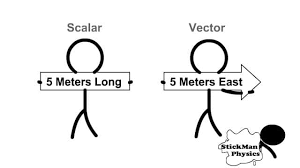
An oft-quoted line is, “A journey of a thousand miles begins with a single step.” It is a very powerful statement that underlines the impact of the “first step”. However, what this quote does not take into account, is the direction of the said step. A step in a wrong direction would lead the person on a thousand mile journey to nothingness. Direction is very important, and haphazard efforts often lead to failure. Direction makes our effort a ‘vector’ quantity from ‘scalar’.
As we saw in the previous chapter (click here to read it), I was at an all-time low, and had challenged myself to crack the top-1000 rank. It was my own “Mission Moon”. And like any space mission, it needed the right equipment, fuel and most importantly, planning. Failing to plan is planning to fail, someone said once. By God’s and my parents’ grace, I had every resource at my disposal. Best coaching classes, entrance exam guides et al. But something else was needed too, which I discovered on the first day of the coaching classes. They were being held in a massive hall, and there were close to 2000-3000 of us in there. The teacher came up and started with Anatomy, and everyone was making notes. I was not used to it, and thus, I failed to make most of the notes in the pre-lunch session. During lunch break, I chatted with some students there. For most of them, it was their second or third, even fourth attempt. Effectively, most of them had already read everything once, twice or maybe more. They were here for the ‘revision’, while I was just discovering the intricacies of human anatomy, that I had forgotten after 1st MBBS. That evening, I sat down at home and gave a rough calculation of the number of students my coaching class would be having across India, if they had 3000 in our centre. And then, there were ten more classes. Everywhere, the faculties would teach the same thing, they would have the same books, same guides.
It was terrifying.
Even if I removed the bottom 20-25% who didn’t study seriously, it still came to almost 50,000 students with almost the same resources and determination like me. And I wasn’t even the smartest guy in the country, with some magic memory. No, not at all. In fact, I had aggregated 65% in MBBS, bang average score according to standards there. So, in order to crack the top 1000, out of those 50,000, I had to do something that made me unique. Something that would get me better scores with the same resources. And from here, the first ‘plan’ was born.
“Play to your strengths, work around your weaknesses.” I remembered this line by Dr B.N. Dastoor, a close friend of my father. It made absolute sense. I had a limited time, and I had to ration my time. And then, I started with an old management tool- the SWOT analysis. It is a summary of one’s Strengths and Weaknesses, the Opportunities they have and the Threats they might face in their way. For that, I had to be brutally honest to myself. Honesty to self, I feel, is one of the most important qualities. We have to own up our failures, identify our mistakes ourselves. We cannot keep on blaming external forces for everything, we cannot keep on making a fool of ourselves in order to justify our every failure. Sometimes, we just have to stand up and say, “Yes, I screwed up.”
From that exercise, came out a lot of revelations. I was good at some subjects, poor at some. I could not mug up blindly, I could not sit and read for more than 6-7 hours a day (I had friends who could read for over 12 hours), and I could not concentrate on studying because of the new toy called Smartphone. There were 19 subjects, some big and some small. Some were easy, some difficult. I took out old papers and studied them, trying to figure out which topics are being asked more often. Since the exam pattern was new, there wasnt a lot to refer to. But what I read, was enough to divide the whole course into three sections:
- Scoring and easy- These were the subjects which were easy to read, small in size, relatively more questions asked and most importantly, the chances of getting more MCQs correct INCREASED with more effort. In short, these were the most rewarding subjects.
- Scoring but difficult- These were the subjects which demanded a lot, but the return of effort was low. You may spend a lot of time on these subjects, but the average increase in score would not be proportional to the effort.
- Not scoring- These were subjects which contributed to 2/3 MCQs but the material in guides was 150-200 pages long.
Each category of subject would be dealt with differently, as per the plan. The first category, I decided to go full throttle- read the entrance guide, class notes, textbook everything. For the second category, I mainly relied on theory part given in entrance guides and some class notes. For the third category, I read only the class notes, which were concise and solved all previous years’ MCQs. This was the plan. Nineteen subjects, nineteen weeks for the first reading.
Since I wasnt very good at memorising, I decided to have multiple revisions. How to do it in a limited time? So, I started something called ‘staggered revisions’, where I would start the day with revision of what I had read in the previous week for an hour or two. So, by the time my ‘first reading’ ended, I was done with my first revision too. And then, there was the matter of weekly tests. Since the tests were online, we had the leisure of giving them whenever we wanted. I wondered, what is the point of these subject wise tests? If it is to test how much we know, then why give the test immediately after reading the subject? Anyone can score there. So, I started this practice where I would give the test one week after studying that chapter. Obviously, my score would be low, but it would help me in defining two things-
- The topics in the subjects I remembered a week later. These would be in the long term memory and during revision, I could simply glance through them.
- The topics I forgot in just a week. These were volatile, short term memory things. These needed to be revised more thoroughly.
It looked good, this plan. Took me almost a week to form it, and now, it was time to implement it. I didnt know whether this would succeed, but it represented the best chance to me. Like in football, a manager can only set the tactics and train the players. The end result is in the hands of the players, and the manager has to remain on the touchline. The difference was, here I was the manager and I was the player. I was blessed to have a fantastic support staff in my parents, my girlfriend (now wife) and above all, blessings of our Guru.
It was time to kick some ass.
 From Earth to Moon
Great…waiting for further epiaodes..good build up..cn relate
LikeLike